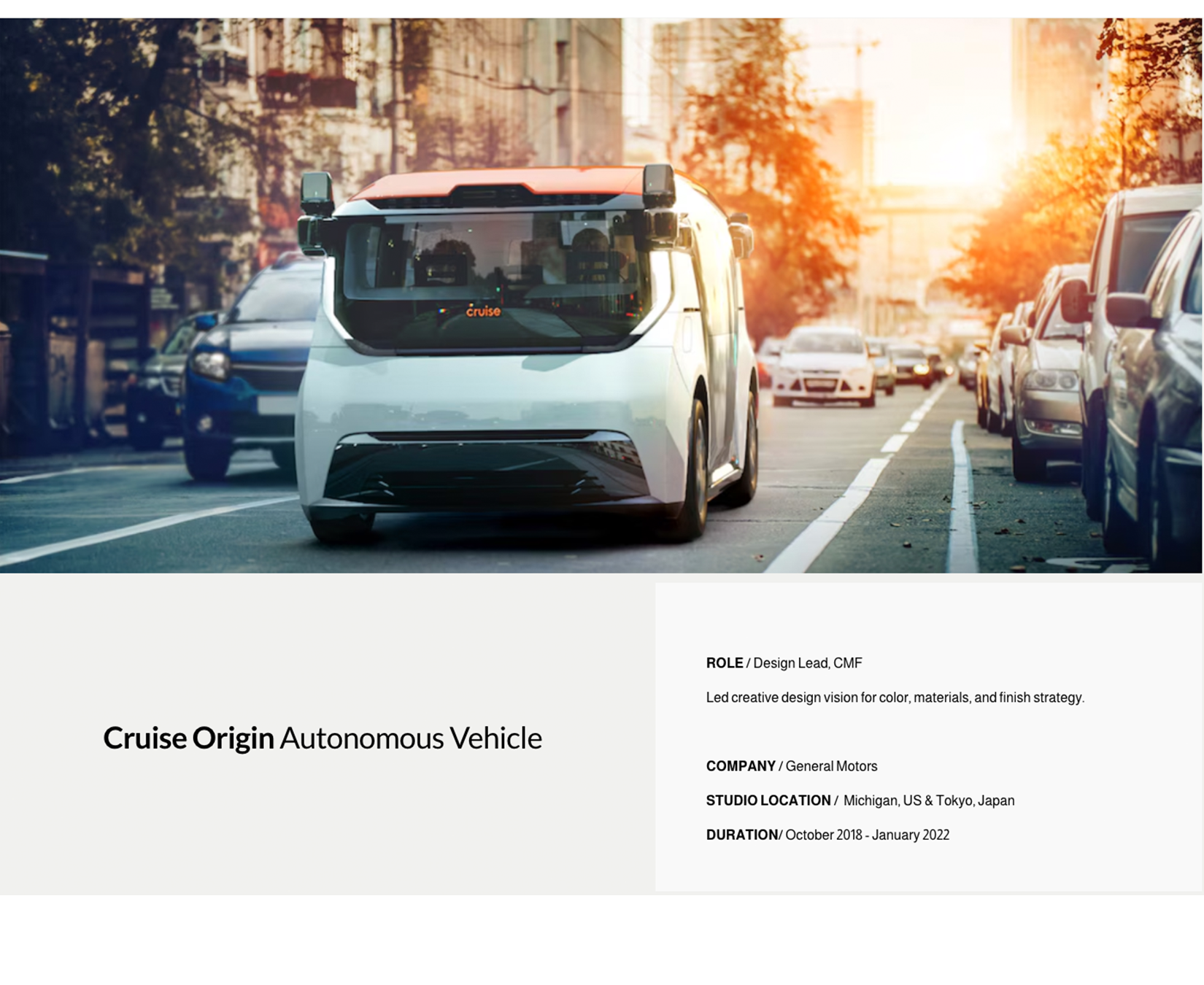
Cruise Origin Autonomous Vehicle

ROLE / Design Lead, CMF

Led creative design vision for color, materials, and finish strategy.

COMPANY / General Motors

STUDIO LOCATION / Michigan, US & Tokyo, Japan

DURATION/ October 2018 - January 2022

TRADE-OFFS + OPPORTUNITIES

STRATEGIC CONTEXT

The Cruise Origin was the heart of a $2.8B+ joint venture between General Motors and Honda, the first creative and engineering partnership of its kind between two global automotive giants. There was no shared design process, no unified team structure, and no IP framework; the mandate was to build all three from scratch while simultaneously delivering the world's first mass production autonomous vehicle.

01

COLOR PALETTE

OUTCOMES + IMPACT

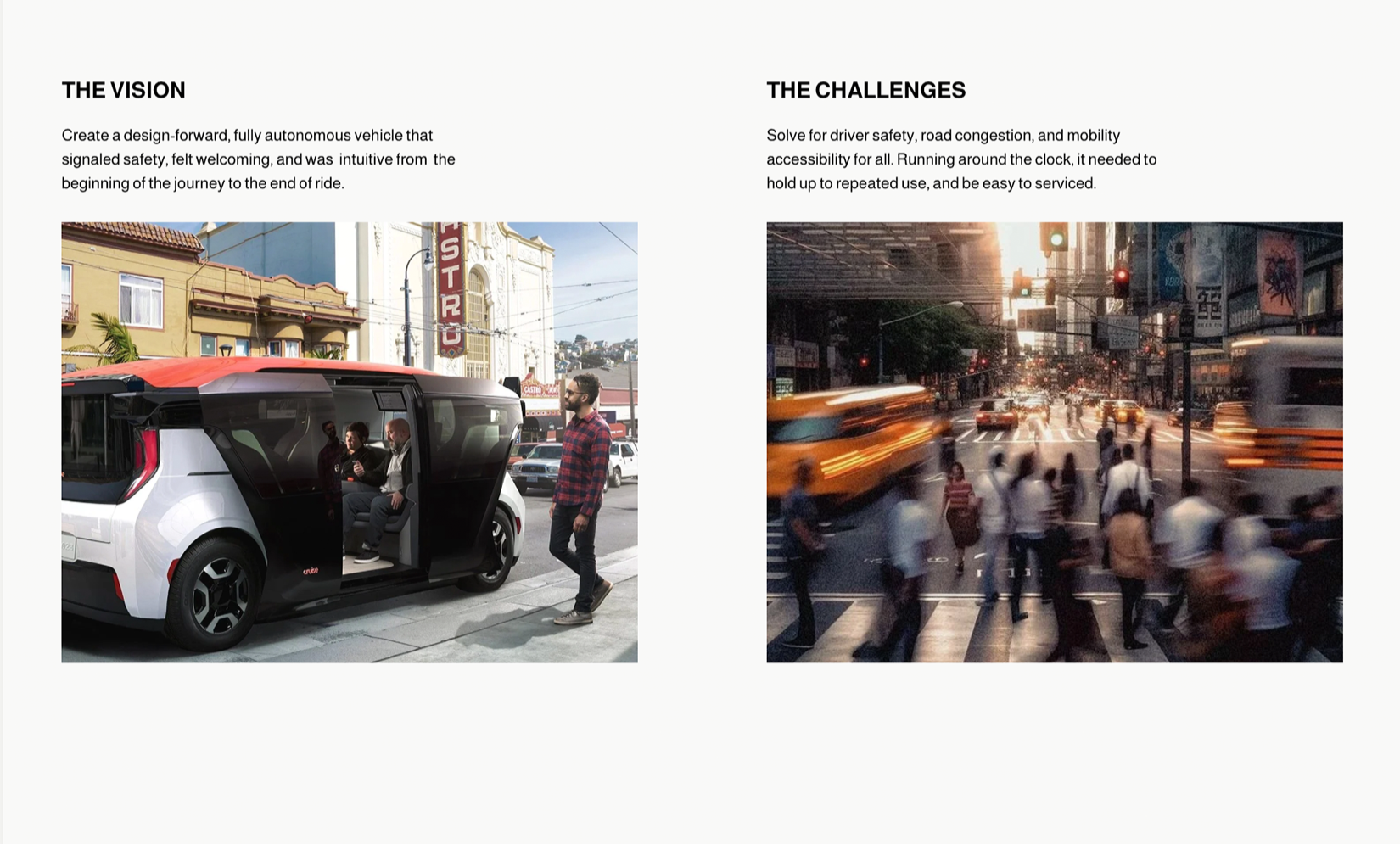
The Origin was designed to move people around big cities. Built from 0 to 1, a ride-share autonomous vehicle to solve for driver safety, road congestion, and mobility accessibility for all. Running around the clock, it needed to hold up to repeated use, while welcoming the public to the future of mobility

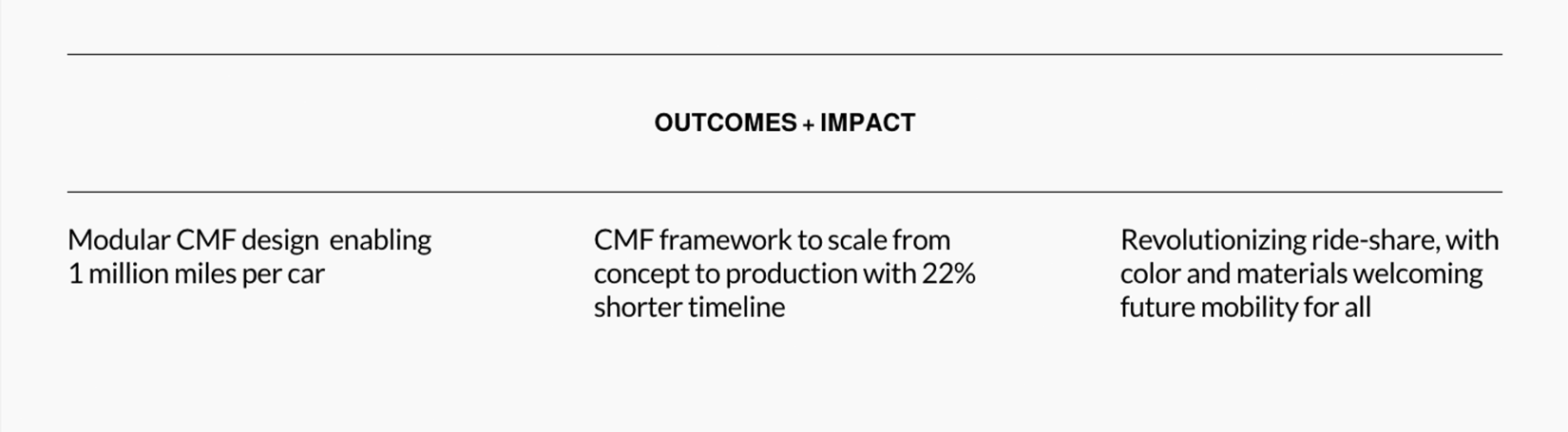
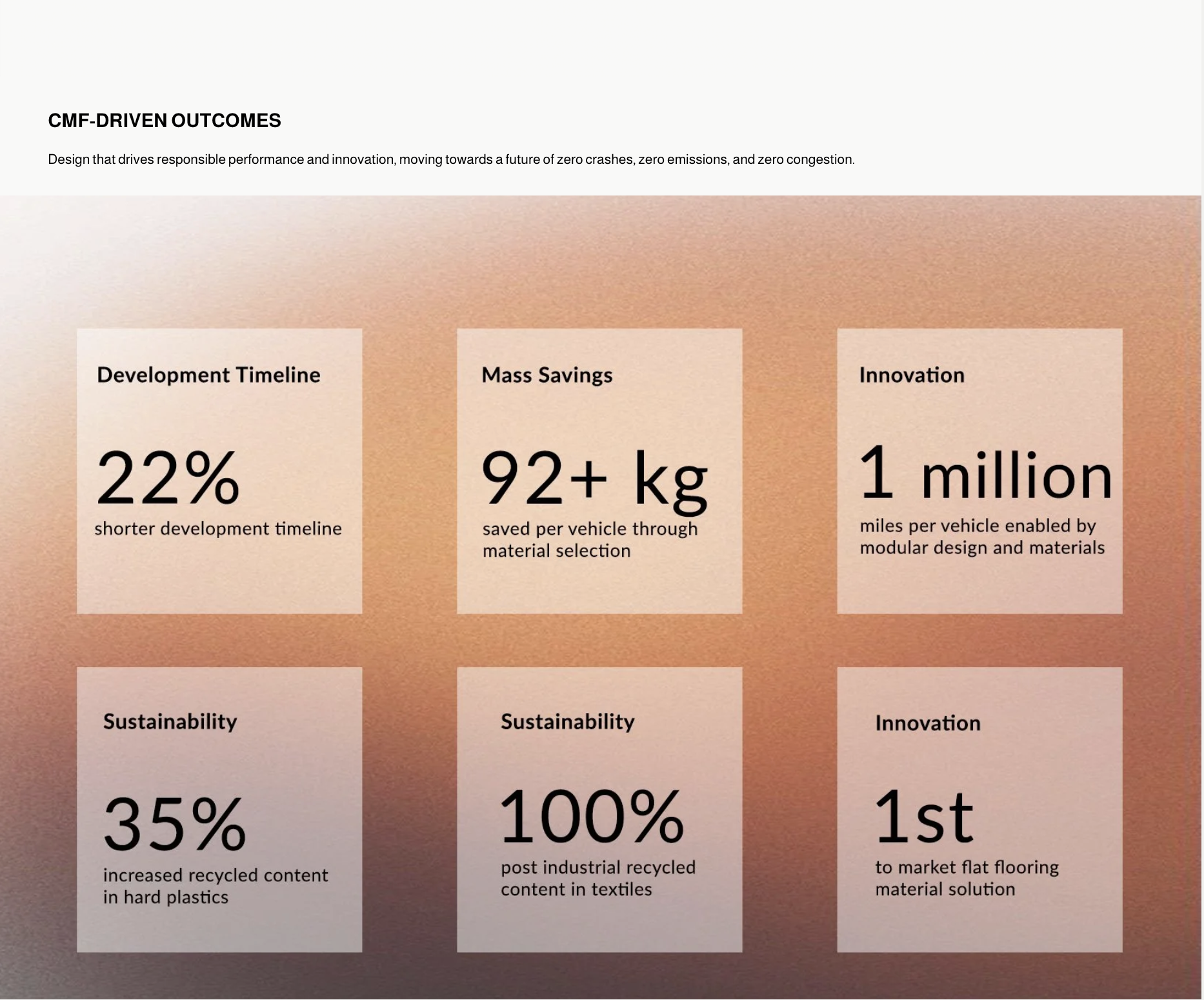
  • Built the organizational structure and creative team for a first-ever $2.8B+ automotive design partnership, from zero to 40+ person multidisciplinary team

    • Reduced design-to-validation cycles by 8 months through iterative prototyping and cross-functional alignment across design, engineering, and manufacturing

    • Established IP strategy and design governance frameworks defining creative ownership across both GM and Honda organizations, setting long-term precedent for the partnership

    • Introduced first-to-market material innovations including novel soft textiles and hard floor trim, establishing a design language distinct from traditional consumer vehicles

    • Developed a modular, scalable CMF system built for fleet durability, adopted as a foundational reference for autonomous vehicle interior design standards

OUTCOMES + IMPACT

03

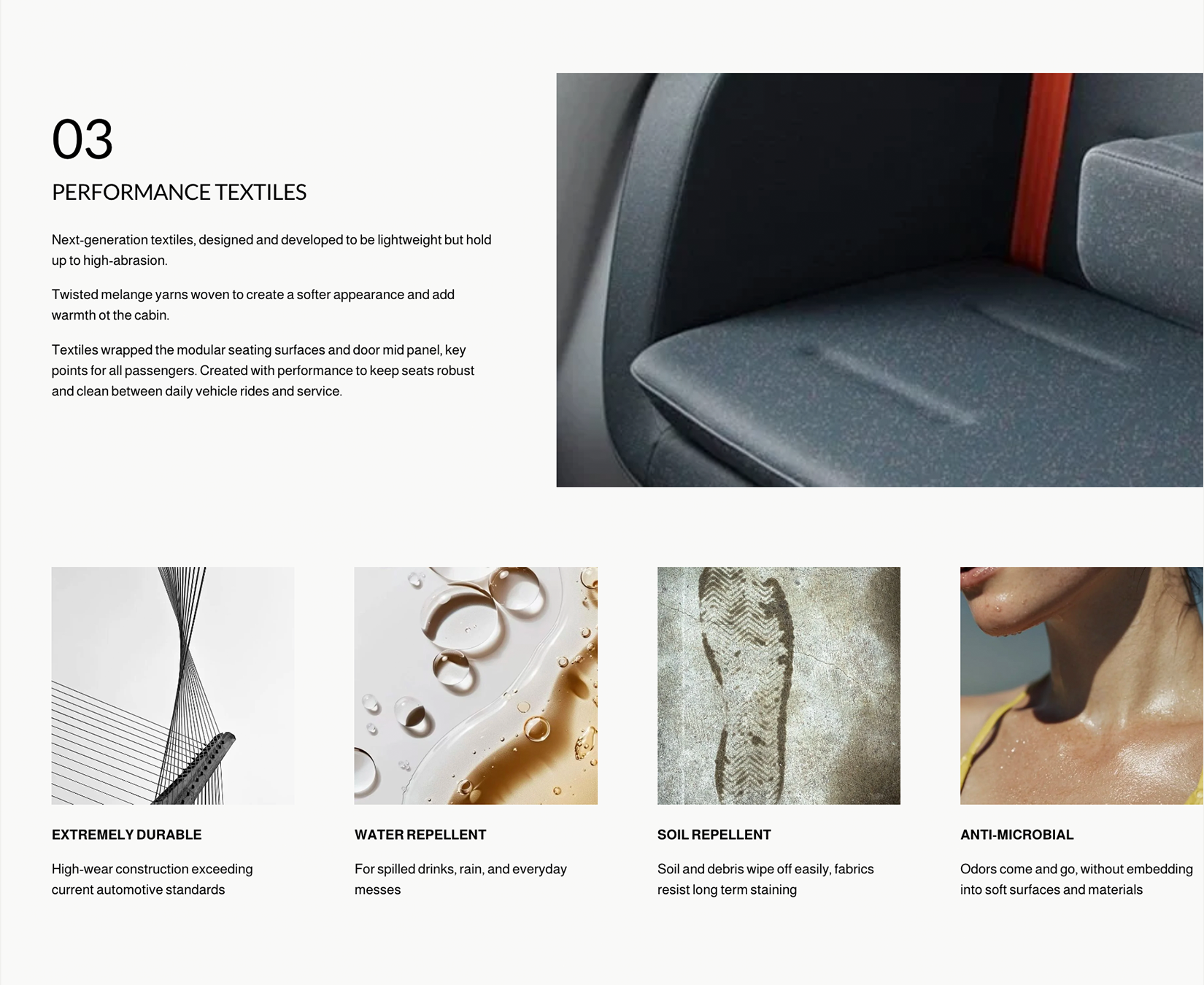
PERFORMANCE TEXTILES

High-wear textiles for repeated use and easy cleaning

PERFORMANCE TEXTILES

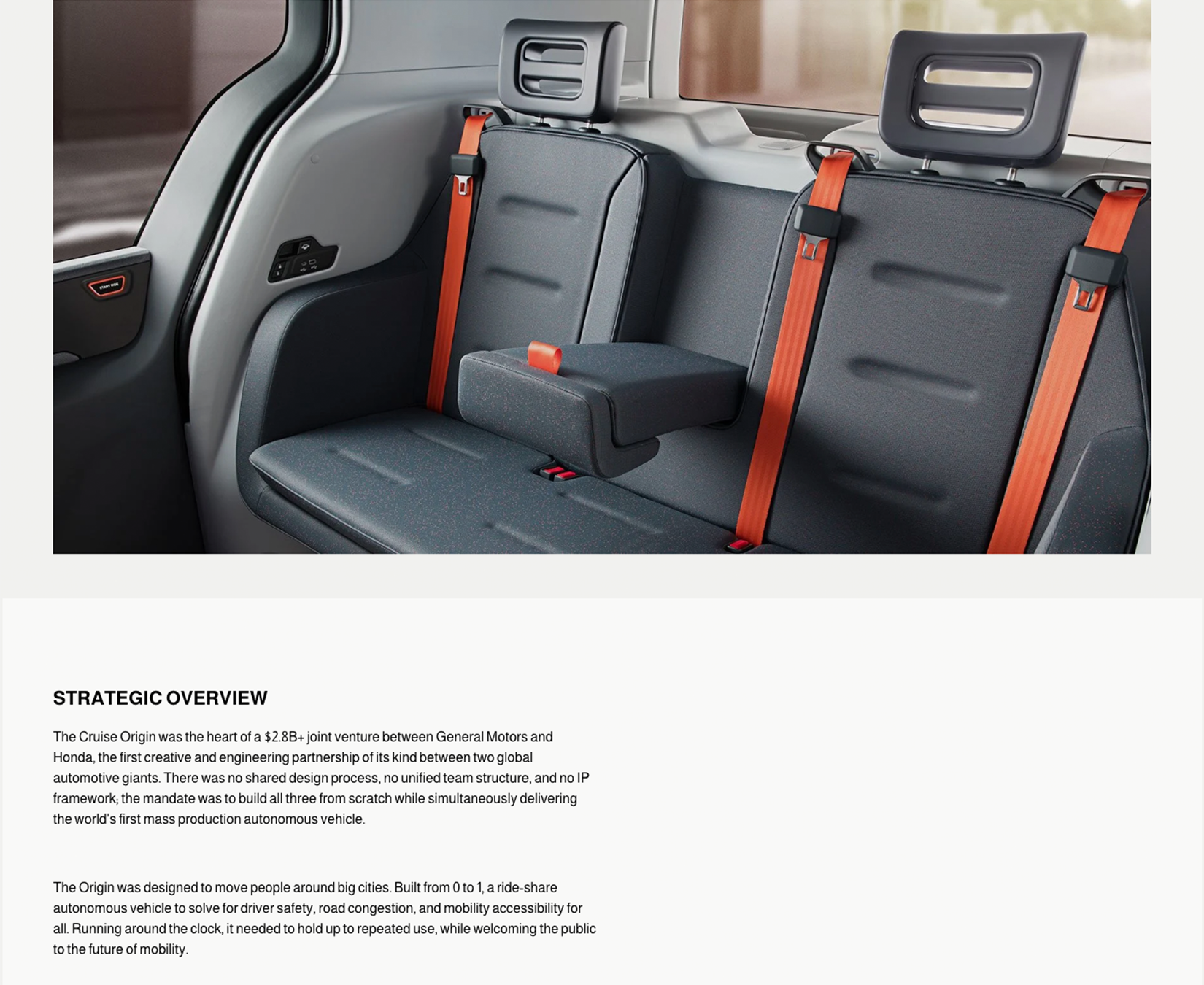
Textiles wrapped the modular seating surfaces and door mid panel, key points for all passengers. Textiles were designed with PCR content, constructed for high abrasion, fibers treated for anti microbial and water repellent properties— ensuring soft surfaces would repel dirt, stains and liquids in between daily vehicle service.

ROLE + RESPONSIBILITIES

/ Defined creative design vision for color, materials, and finish

/ Led multidisciplinary team of 40+ to design, develop, and execute CMF strategy

/ Defined short- and mid-term innovation strategy across design systems, IP frameworks, and creative direction for the partnership

/ Built a unified global development process from two distinct organizational cultures

/ Developed CMF standards, appearance definition, tooling protocols, and development sign-off frameworks governing design readiness

/ Reduced design-to-validation cycles by 8 months through iterative prototyping, structured supplier feedback loops, and early cross-functional alignment
CHALLENGES + CMF PRIORITIES

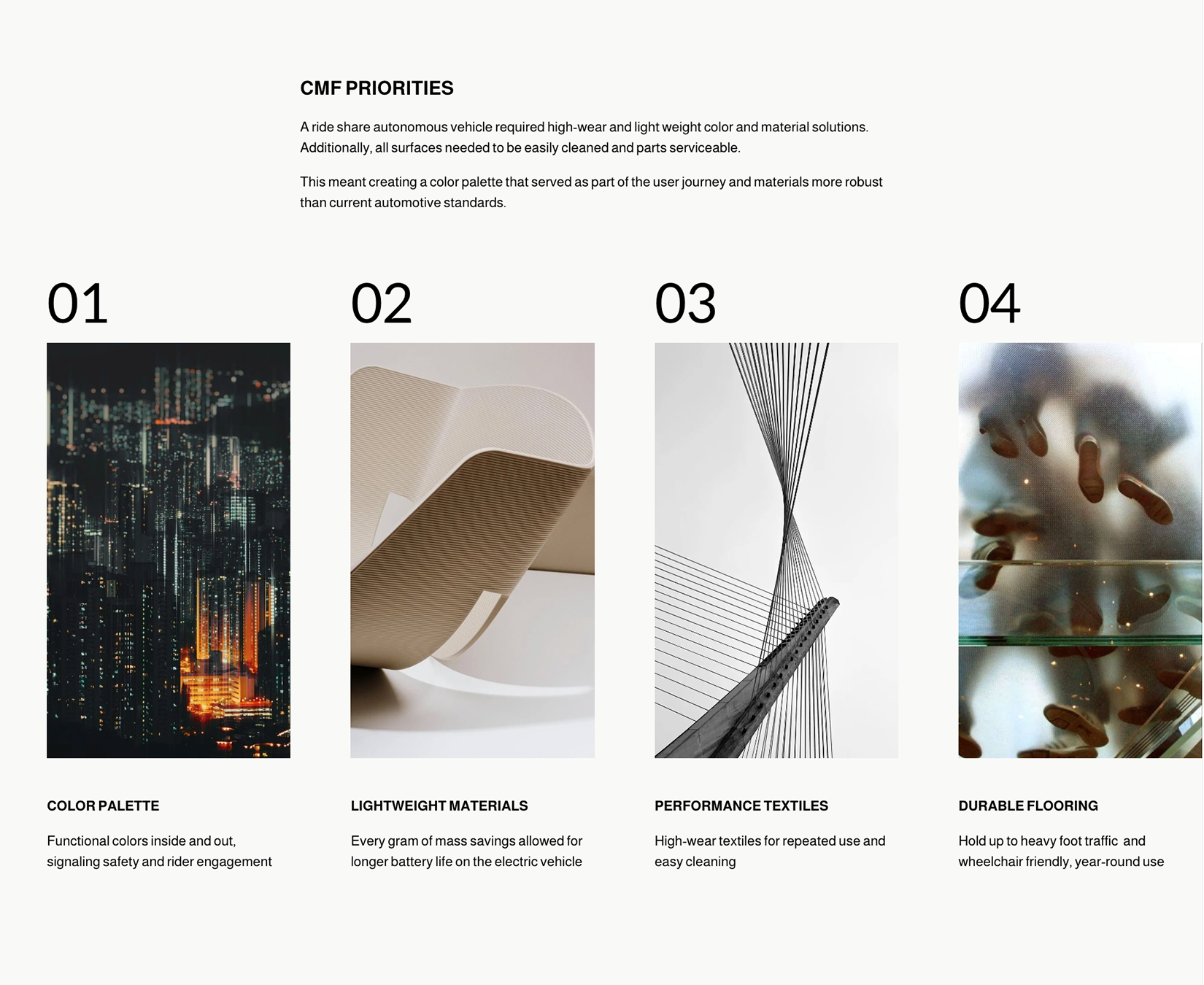
A ride share autonomous vehicle required high-wear and light weight color and material solutions. Additionally, all surfaces needed to be easily cleaned and parts serviceable.

This meant creating a color palette that served as part of the user journey and materials more robust than current automotive standards.

LIGHTWEIGHT MATERIALS

02

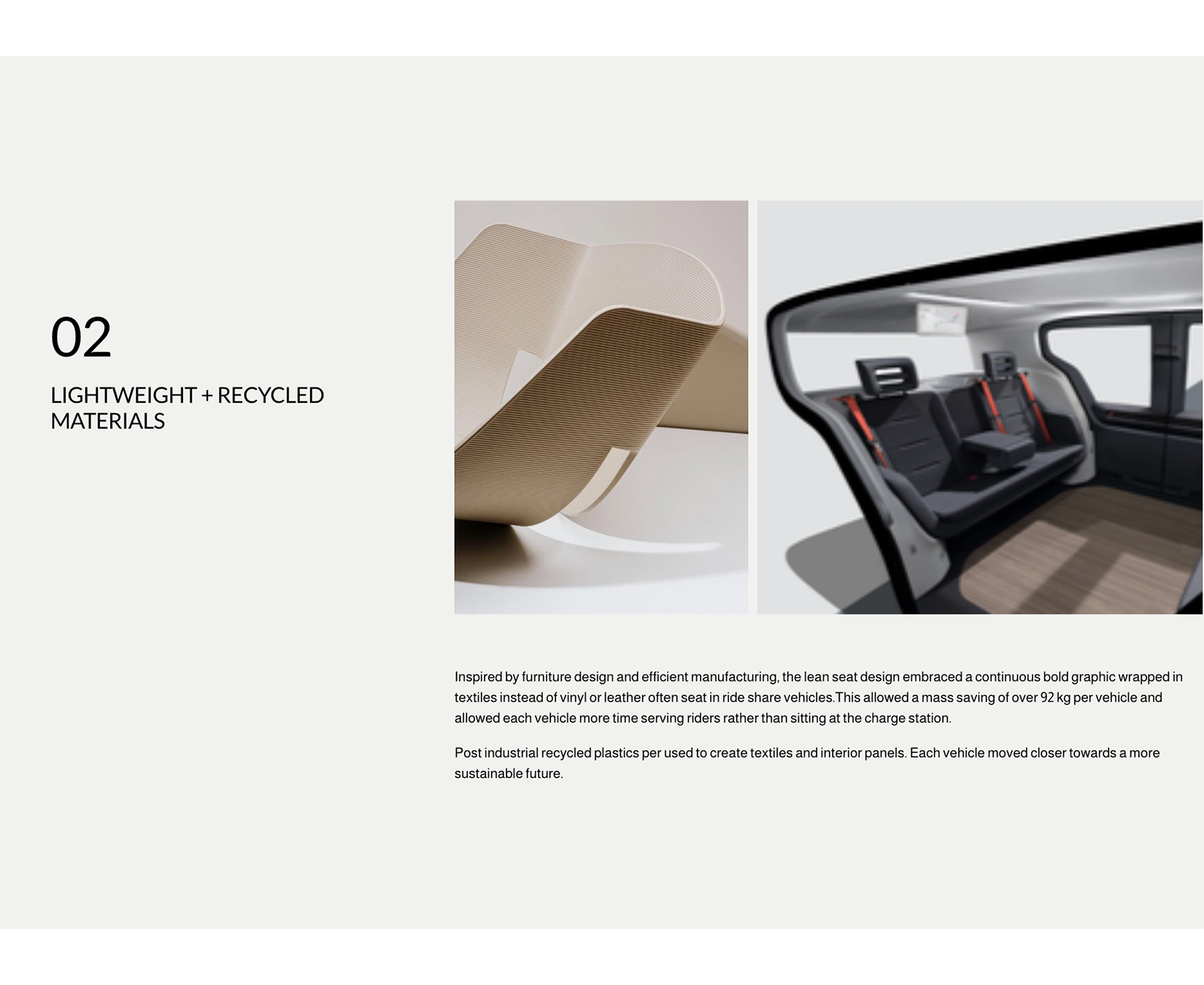
LIGHTWEIGHT MATERIALS

Every gram of mass savings allowed for longer battery life on the electric vehicle

DURABLE FLOORING

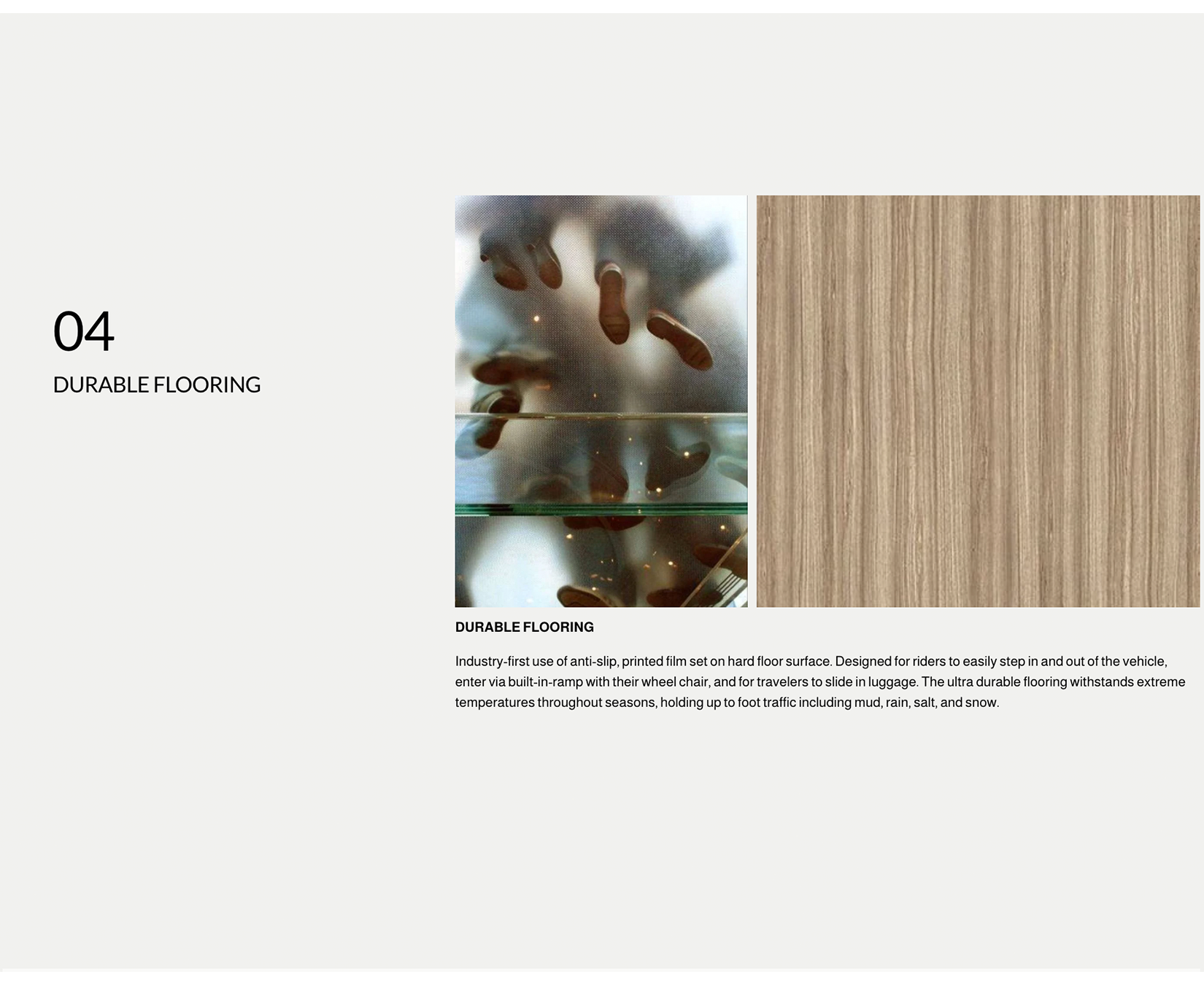
DURABLE FLOORING

Industry-first use of anti-slip, printed film set on hard floor surface. Designed for riders to easily step in and out of the vehicle, enter via built-in-ramp with their wheel chair, and for travelers to slide in luggage. The robust flooring withstands extreme temperatures throughout seasons, easy sleep up for foot traffic including mud, rain, salt and snow.


COLOR PALETTE

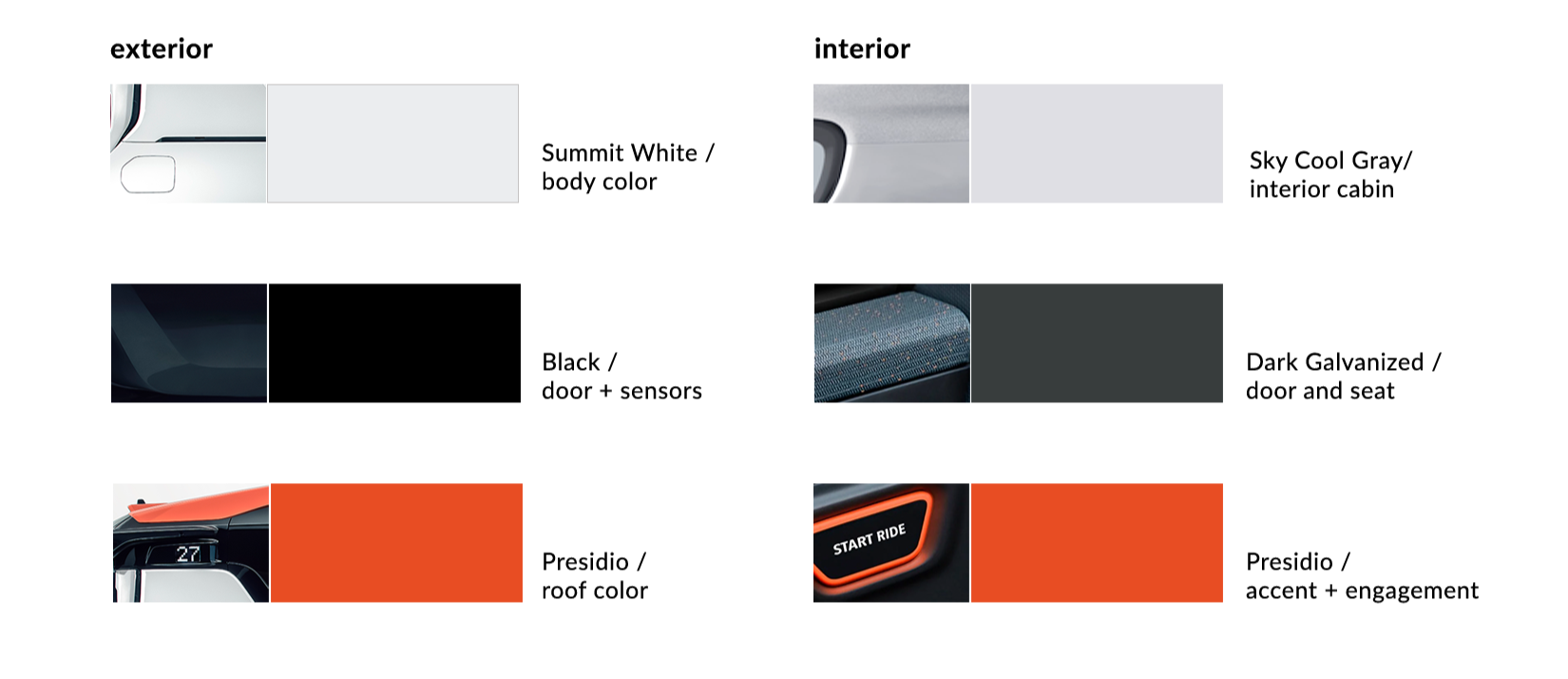
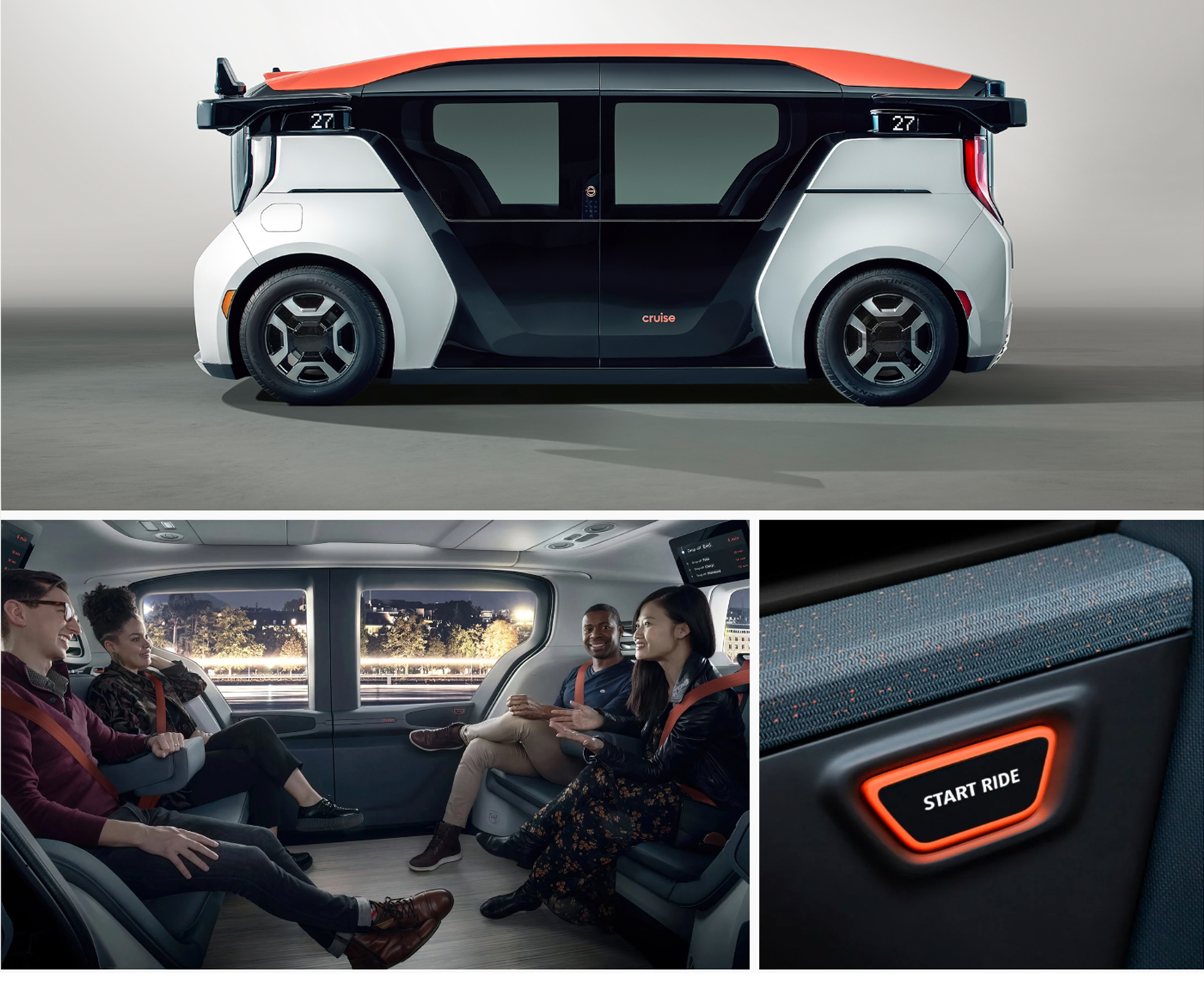
The vehicle interior featured two main colors, Sky Cool Gray and Dark Galvanized, leaning away from traditional automotive and into product design and consumer electronics aesthetic. The darker color highlighted the doors and seats, the main points of physical contact for riders. Presidio mirrored the Cruise branding and signaled user touch points — from the app to request the vehicle, to the identifiable roof color, on the seatbelt, and the emergency “start/ stop ride” button.

Exterior colors in pigments and formulations allowed for LIDAR and radar technology in sensors to enable autonomous driving

LIGHTWEIGHT MATERIALS

Instead of a rolled good soft trim or high-pile textiles traditionally used for shared vehicles, we pursued a tight weave construction fabric with a brushed hand. This allowed a mass saving of over 200lbs per vehicle and contributed to vehicles serving riders rather than sitting at the charge station.


04

DURABLE FLOORING

Hold up to heavy foot traffic and wheelchair friendly, year-round use


PROJECT OVERVIEW

The Origin was designed to move people around big cities. Built from 0 to 1, a ride-share autonomous vehicle to solve for driver safety, road congestion, and mobility accessibility for all. Running around the clock, it needed to hold up to repeated use, while welcoming the public to the future of mobility.


COLOR PALETTE

Functional colors inside and out, signaling safety and rider engagement

01

02

04

03

PERFORMANCE TEXILES